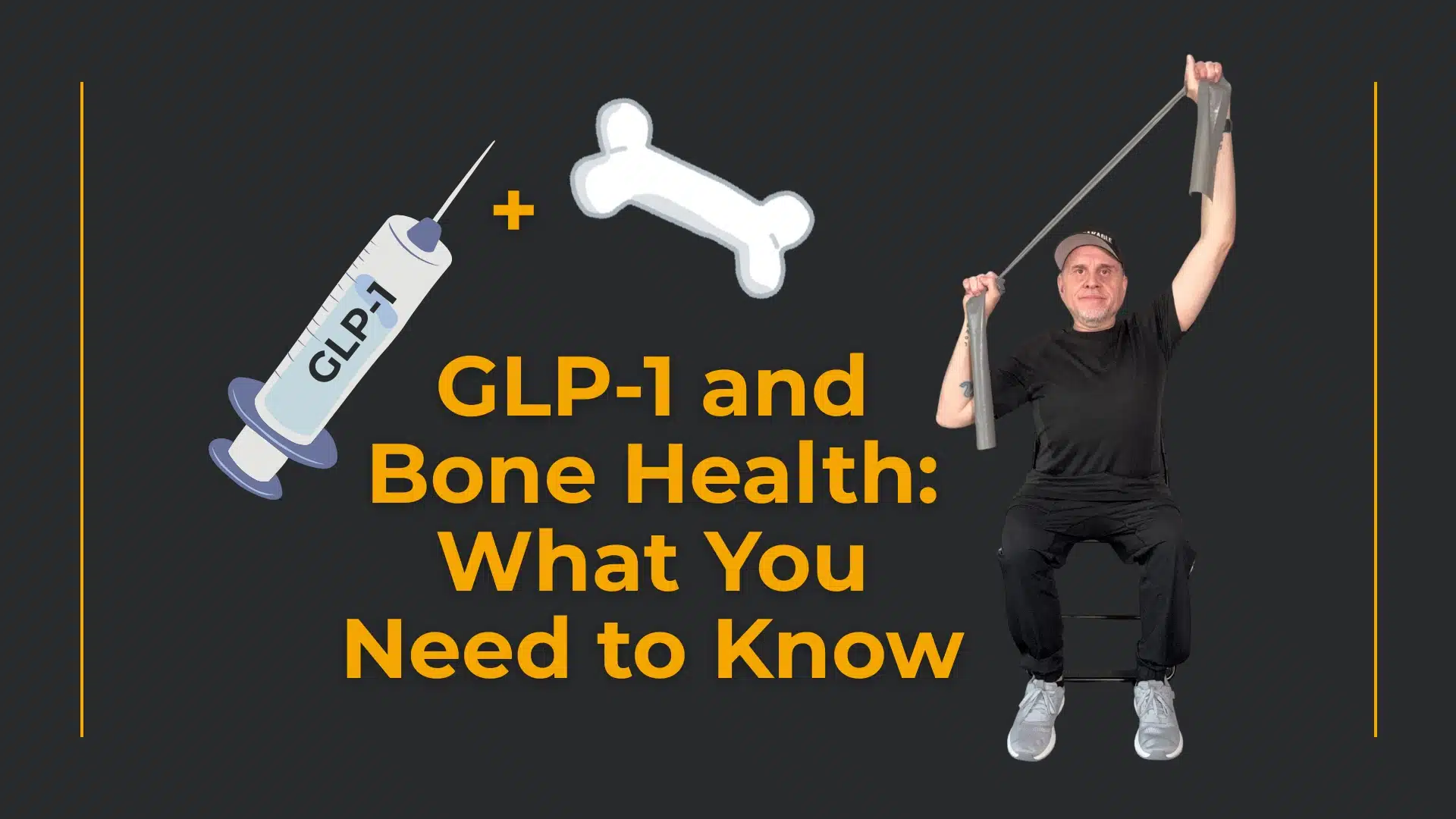
If you’re living with Osteogenesis Imperfecta (O.I.) or dealing with fragile bones from conditions like osteoporosis or osteopenia, you’ve probably heard about GLP-1 medications such as Zepbound, Wegovy, or Ozempic. These medications are being prescribed for weight loss more than ever, and many people are seeing results.
Weight loss can reduce stress on joints, improve cardiovascular health, and help with conditions like sleep apnea or diabetes. But when bone health is part of your story, there’s a lot more to consider.
Before we get into what GLP-1s do and how they affect your bones and muscles, I want to start with something I’ve learned personally.
Why Natural Weight Loss Through Nutrition and Movement Matters
As someone living with O.I., I know how frustrating it can be to deal with physical limitations and health challenges. Over my lifetime, I’ve had more than 70 fractures, 12 surgeries, and 4 rods placed in my legs. There was a time when I believed movement wasn’t possible for me. I thought exercise might do more harm than good.
But I learned that movement isn’t the enemy, it’s the medicine. When I started focusing on consistent, adaptive exercise and better nutrition, my bone density improved. My body became stronger. My energy increased. And I felt more capable than ever.
That’s why I always encourage people to start with natural methods first: eating in a way that nourishes the body and moving in a way that builds strength.
Still, I know that for some people, natural weight loss just doesn’t happen easily. When mobility is limited or medical conditions make exercise difficult, medications like GLP-1 receptor agonists can become an option. And that’s okay, as long as we understand how they work and what needs to happen alongside them to stay healthy.
What Are GLP-1 Medications and How Do They Work?
GLP-1 stands for glucagon-like peptide-1, a hormone your intestines release after you eat. It helps regulate appetite and blood sugar by:
- Slowing digestion so you feel fuller longer
- Reducing appetite and calorie intake
- Helping control blood sugar levels
When you take a GLP-1 medication like Zepbound, Wegovy, or Ozempic, it mimics that natural hormone to help you eat less and lose weight. For many, it can lead to significant weight loss over time.
The challenge is that these medications don’t just reduce body fat; they can also reduce lean muscle and bone mass. And that can create problems, especially for those of us who already deal with fragile bones.
How GLP-1s Can Affect Muscle and Bone
Muscle Loss
When you lose weight, some of that weight comes from muscle. Studies show that people on GLP-1 medications may lose anywhere from 15% to 40% of their lean mass as they lose weight (PubMed).
That’s a big deal. Muscle isn’t just about strength, it’s your body’s natural support system. It keeps your metabolism active, helps protect your bones from stress, and supports balance and posture. When you lose too much muscle, your bones take more of the load. For those with O.I. or osteoporosis, that can mean an increased risk of fractures and falls.
Bone Density Changes
Bone density can also decrease during weight loss, even when that weight loss comes from medication. One study found that losing just 10% of your body weight can lead to a 2.2% drop in bone mineral density in the hips and spine (PMC).
For someone with O.I., that can mean even more fragility. And for someone with osteoporosis, that loss can make bones weaker and more prone to breaks.
So while losing weight can ease stress on your bones and joints, it’s important to remember that the quality of your weight loss matters just as much as the quantity.
If you’re losing muscle and bone at the same time as fat, you’re setting yourself up for long-term challenges.
My Personal Experience with Strength and Bone Health
When I decided to take my health seriously, I focused on what I could control. I didn’t have access to every machine or exercise, and I couldn’t lift heavy weights like most people. But I could move.
I started with small, adaptive movements. I worked with resistance bands. I focused on strength training from a seated position when needed. Over time, I built confidence and consistency.
When I got my next DEXA scan, my bone density had improved. That’s when I knew that movement wasn’t just possible — it was necessary.
That’s also why I’m so passionate about helping others with O.I. or fragile bones move safely. You can build strength, protect your bones, and even improve your density over time. It takes patience, but it works.
GLP-1 medications can help some people start their health journey, but without exercise and good nutrition, the benefits don’t last. The key is to combine everything: medication, movement, and mindful eating.
The Risk of Weight Regain After Stopping GLP-1s
Another reality to consider is what happens when you stop taking the medication. Studies show that many people regain weight within months of discontinuing GLP-1 medications.
- Weight regain can begin as early as 8 weeks after stopping treatment (BMC Medicine).
- Some regain two-thirds of what they lost within two years (PubMed).
This happens because the medication helps regulate appetite, but once it’s gone, your body goes back to its original hunger signals.
The best defense against this is a strong foundation of muscle and metabolism built through consistent movement and nutrition.
When you pair GLP-1 use with adaptive strength training and nutrient-rich food, you help your body maintain results even if you eventually stop the medication.
What This Means for O.I., Osteoporosis, and Fragile Bones
Whether you have O.I., osteoporosis, or another condition that affects bone health, the same principle applies:
Your bones need support from your muscles, and your muscles need fuel from good nutrition.
If any of those three pieces are missing, the entire structure becomes weaker.
Think of your body like a house.
Your bones are the frame, your muscles are the beams and supports, and your nutrition is the foundation. If you start removing pieces of that structure, everything becomes unstable.
For people with O.I., the bones are already fragile. For those with osteoporosis, bone density is already low. In both cases, losing muscle can increase the risk of falls or fractures.
That’s why adaptive fitness and balanced nutrition are essential — especially if you’re using a medication that changes how your body burns energy or processes food.
Why Movement + Nutrition Must Be Part of the Plan
Here’s how you can safely combine GLP-1 treatment with a bone-strong lifestyle.
1. Prioritize Strength and Resistance Training
Building muscle doesn’t mean lifting heavy weights or running marathons. It can be as simple as doing seated resistance band exercises, light dumbbell work, or bodyweight movements.
Research shows that people who include resistance training during weight loss maintain more lean mass and bone density (Medical News Today).
In my coaching, I focus on adaptive strength training that fits every ability level. Whether you’re seated, standing, or using mobility aids, there’s always a way to build muscle safely.
2. Focus on Protein and Nutrient Density
GLP-1 medications often decrease appetite, so it’s easy to miss out on essential nutrients. Make sure you’re getting enough protein, calcium, vitamin D, and magnesium — all critical for muscle and bone strength.
A study from Mass General notes that combining high-protein diets with consistent exercise has the greatest impact on preserving muscle and bone during GLP-1 treatment (Mass General Advances in Motion).
Protein shakes, Greek yogurt, lean meats, tofu, or beans can all help fill in the gaps when your appetite is lower.
3. Move Safely and Consistently
Even small, gentle movements can make a difference. If you’re in a wheelchair or have limited mobility, seated workouts can strengthen the upper body and core. If you can stand, work on balance and gentle resistance.
Consistency is what matters most. Moving a little each day helps your body adapt, strengthens your muscles, and supports bone health.
4. Keep the Long View
GLP-1s can help jump-start progress, but they’re not designed to be the only solution. Think of them as a short-term boost while you develop long-term habits.
When you focus on building strength, improving nutrition, and caring for your bones, you’re setting yourself up for success whether you stay on the medication or not.
How to Build a Bone-Healthy Routine
Here’s a simple starting framework:
- Strength training two to three times per week (adaptive, seated, or standing).
- Balanced meals with protein at every serving.
- Calcium-rich foods like low-fat dairy, almonds, or fortified plant milks.
- Vitamin D exposure from sunlight or supplements.
- Hydration to support muscle recovery and joint health.
- Gentle cardio like walking, chair marching, or adaptive cycling to boost circulation.
Remember, it’s not about perfection. It’s about consistency. Small steps build strong bones.
If You’re Taking (or Considering) a GLP-1 Medication
Here’s what I recommend:
- Talk to your doctor about how the medication could impact your muscle and bone health.
- Discuss adding resistance training and nutrition support into your plan.
- Consider regular DEXA scans or muscle mass measurements to track progress.
- Don’t go it alone — connect with someone who understands adaptive fitness and bone health.
Let’s Build Your Plan Together
If you’re taking a GLP-1 medication or thinking about it, I can help you build a safe, effective plan that protects your muscles, bones, and metabolism.
I live with O.I. myself, and I’m a certified personal trainer who has seen firsthand how adaptive strength and consistent movement can improve bone health.
Visit my coaching page: www.tonyjacobsen.com/coaching
Or schedule a free Pathway Call: https://tidycal.com/tonyjacobsen/pathway-consultation
We’ll build your #UNBREAKABLE body the right way, with strength, safety, and confidence.
Final Thoughts
GLP-1 medications can be powerful tools for improving health. For many people, they provide a jump start when nothing else seems to work. But if you live with O.I., osteoporosis, or fragile bones, you must take extra care to protect your muscle and bone strength along the way.
Weight loss alone isn’t the goal. The real goal is to build a body that’s stronger, steadier, and ready to support you for the long term.
When you combine the right medication, adaptive fitness, and smart nutrition, you’re not just losing weight — you’re building the foundation for lasting health.
That’s what living an #UNBREAKABLE life is all about.


